
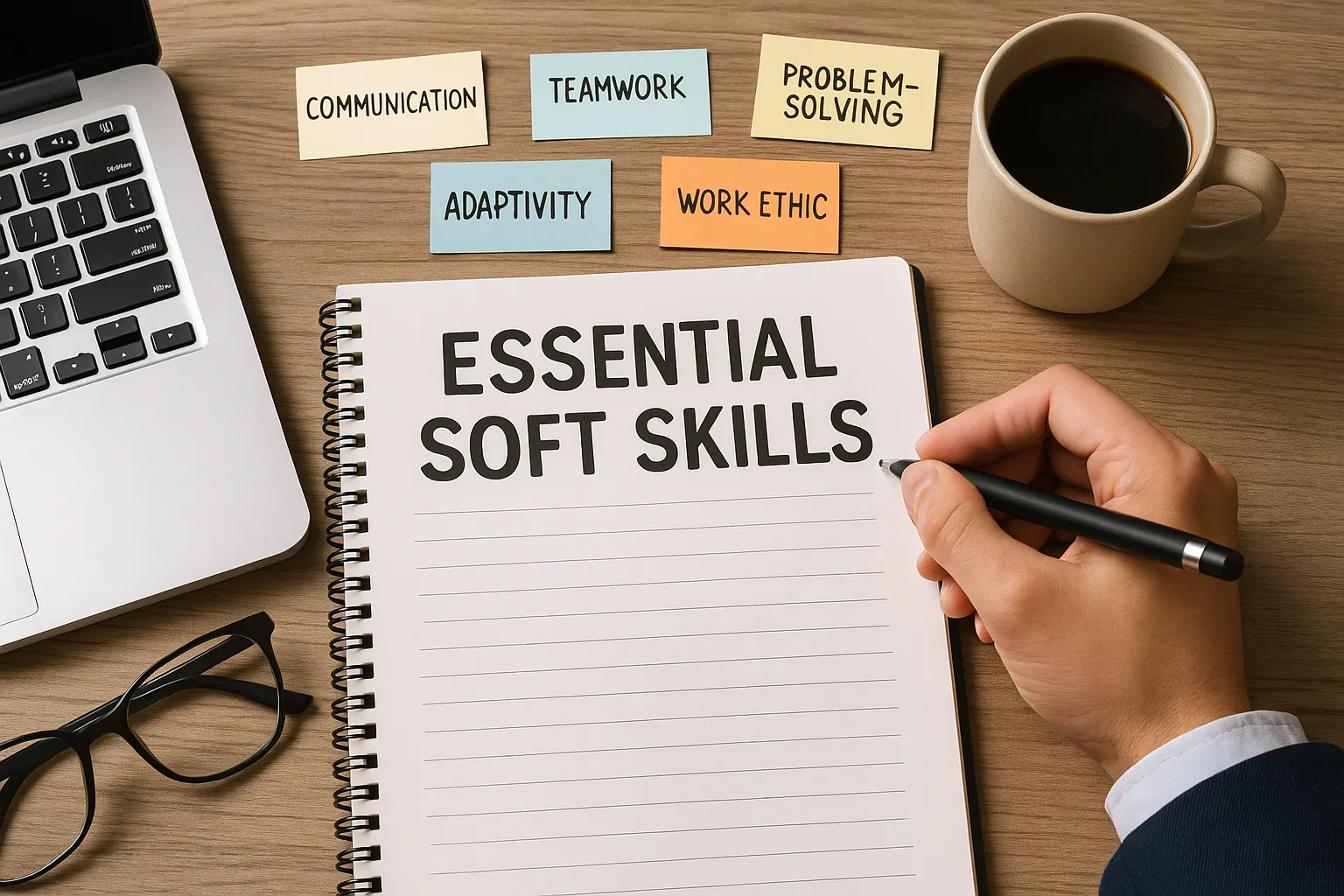
Technical skills get your foot in the door, but soft skills are what keep you in the room — and help you rise. In today’s dynamic, people-driven workplaces, soft skills are no longer “nice to have.” They are essential. Whether you’re just starting out or aiming for leadership, developing strong soft skills can significantly boost your professional impact.
Soft skills are personal attributes and interpersonal abilities that influence how you work, communicate, and collaborate. They’re not tied to specific tasks, but they deeply affect your performance, relationships, and reputation.
Let’s explore the key soft skills you need to stand out in the job market — and how to develop them intentionally.
Communication Skills
At the top of nearly every employer’s wish list is clear, confident, and respectful communication. It’s not just about talking — it’s about listening, understanding, and expressing ideas effectively.
Strong communication helps you:
- Present your ideas clearly
- Resolve conflicts diplomatically
- Collaborate more efficiently
- Build trust with coworkers and clients
How to improve:
- Practice active listening in every conversation
- Ask clarifying questions before responding
- Record yourself giving a short presentation and review your tone and clarity
- Read and write regularly to expand your vocabulary and expression
Effective communication is a career-long asset.
Emotional Intelligence (EQ)
Emotional intelligence is your ability to understand and manage your own emotions — and to recognize and influence the emotions of others. In high-pressure or team-based environments, EQ often matters more than IQ.
It includes:
- Self-awareness
- Self-regulation
- Empathy
- Social awareness
- Relationship management
Why it matters:
- Helps you navigate workplace dynamics
- Builds deeper connections with colleagues
- Improves decision-making under stress
- Prevents conflicts and promotes collaboration
How to develop it:
- Reflect daily on your emotional responses
- Ask for honest feedback from trusted peers
- Practice empathy by listening without judging
- Stay calm and composed during high-stress moments
EQ makes you a better team player, leader, and communicator.
Adaptability
In a fast-changing world, the ability to adapt is crucial. New technologies, changing industries, and unexpected challenges require professionals who can pivot quickly and embrace change.
Adaptability shows that you:
- Stay productive under pressure
- Are open to learning and growth
- Can handle uncertainty without panic
- Solve problems creatively
To build this skill:
- Say “yes” to unfamiliar projects or tools
- View change as an opportunity, not a threat
- Stay informed on trends in your field
- Reflect on past changes you’ve handled well
Flexible professionals stay valuable — no matter how the market shifts.
Problem-Solving
Every job comes with challenges. The ability to identify issues, think critically, and find solutions is highly prized across industries.
Strong problem-solvers:
- Analyze situations without overreacting
- Break problems into manageable parts
- Brainstorm and test different approaches
- Learn from outcomes, whether successful or not
Ways to improve:
- Practice “root cause” thinking — ask why something failed, not just what failed
- Use frameworks like SWOT analysis or mind maps
- Play strategy games or puzzles to stimulate critical thinking
- Collaborate with others to hear different perspectives
Problem-solvers are seen as leaders in action — even before they hold formal titles.
Teamwork and Collaboration
Even in independent roles, the ability to collaborate matters. Teamwork is more than working together — it’s about aligning efforts, resolving conflicts, and helping others succeed.
Why employers value it:
- Smooths workflows across departments
- Enhances innovation through diverse input
- Builds positive team culture
- Reduces friction and miscommunication
How to be a better collaborator:
- Share credit and acknowledge contributions
- Offer help without being asked
- Respect diverse opinions and working styles
- Stay open to feedback and willing to compromise
The best teams thrive when individuals invest in each other’s success.
Time Management
Deadlines, multitasking, meetings — every role demands time management. It’s not about doing everything quickly, but about doing the right things efficiently.
Good time managers:
- Prioritize tasks based on impact
- Avoid procrastination and distractions
- Set realistic deadlines and meet them
- Communicate clearly about capacity
To build this skill:
- Use time-blocking or the Pomodoro Technique
- Plan your day the night before
- Track how you actually spend time to find patterns
- Learn to say no to tasks that don’t align with your goals
Managing your time well signals that you respect others’ time too.
Leadership — Even Without a Title
Leadership isn’t just for managers. Anyone can show leadership by taking initiative, supporting others, and driving progress.
Leadership traits include:
- Vision and strategic thinking
- Accountability and ownership
- Motivating others
- Resolving issues before they escalate
How to practice leadership:
- Take responsibility for the success of a project
- Mentor or guide a less experienced colleague
- Volunteer for tasks that others avoid
- Share solutions instead of only pointing out problems
The ability to lead, regardless of role, makes you indispensable.
Conflict Resolution
Disagreements are inevitable. What sets professionals apart is their ability to handle conflict constructively — without harming relationships or morale.
Conflict resolution involves:
- Staying calm and objective
- Listening to all sides
- Finding common ground
- Creating win-win solutions
How to improve:
- Stay aware of your own triggers
- Address issues early, not when they boil over
- Focus on facts, not personalities
- Be willing to compromise and apologize when needed
People who resolve conflicts with grace are often trusted with greater responsibility.
Networking and Relationship Building
Your technical skills matter, but so does your network. Building relationships — internally and externally — opens opportunities, expands resources, and builds credibility.
Why it matters:
- Helps with referrals, collaborations, and visibility
- Builds your personal brand
- Gives you access to industry insights
- Creates a safety net during career transitions
How to improve:
- Attend events (virtual or in-person) in your field
- Stay active on platforms like LinkedIn
- Follow up with people you meet — don’t let connections fade
- Offer value before asking for anything
Relationship building is a long game — but one that pays off in every stage of your career.
Final Thought: Invest in What Truly Sets You Apart
Soft skills are what make you not just employable, but irreplaceable. They shape how others experience your presence, your contributions, and your leadership — even before you hold a formal position of power.
While technical tools will change and roles will evolve, soft skills are timeless. And the best part? You can strengthen them every single day, simply by being intentional.
The more you grow these skills, the more confident, effective, and fulfilled you’ll become in your career.