
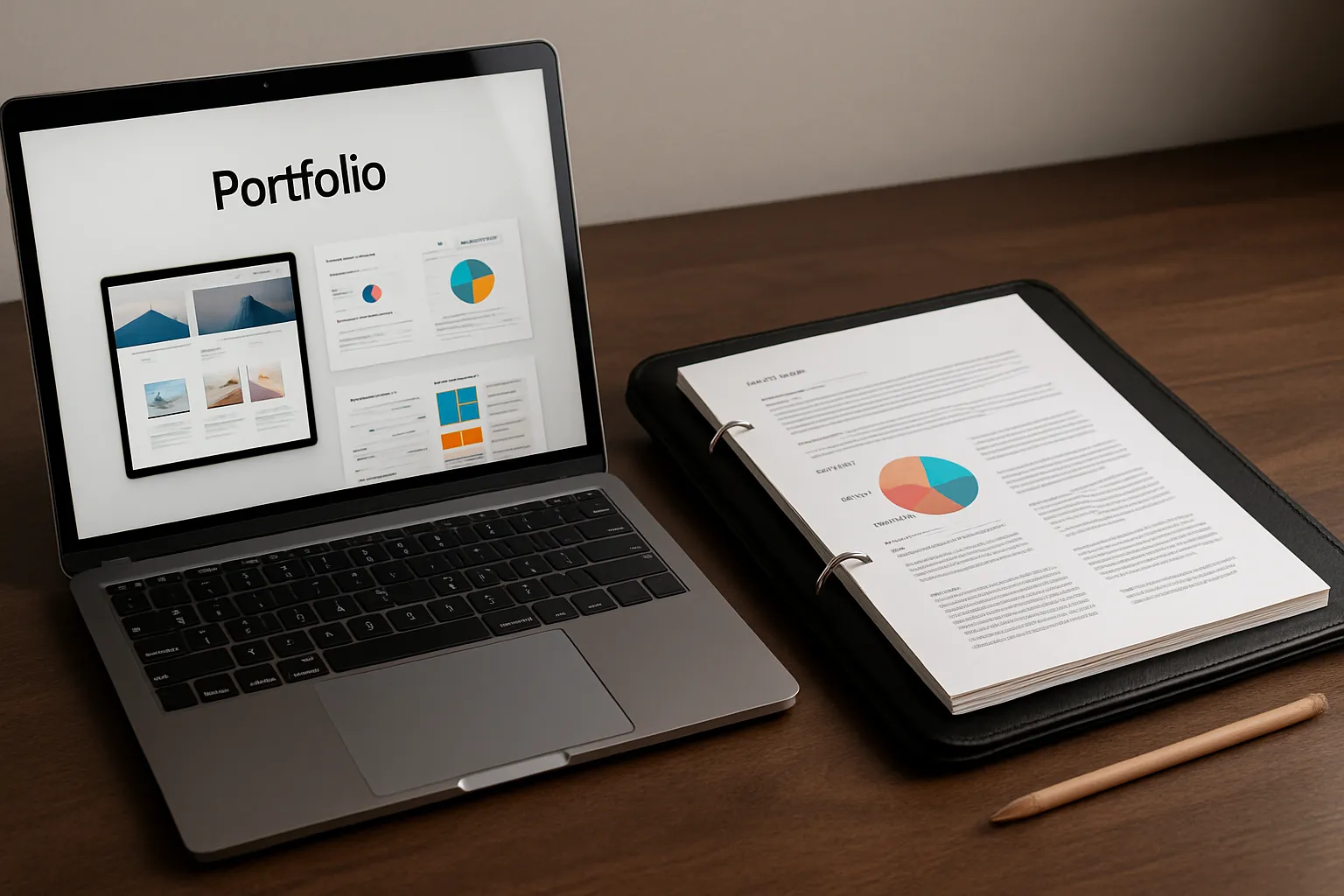
A professional portfolio is more than just a collection of past work — it’s your personal showcase. Whether you’re a designer, writer, developer, marketer, freelancer, or job seeker in any field, a well-crafted portfolio can open doors, build credibility, and set you apart from the competition.
Unlike a résumé, which focuses on qualifications, a portfolio allows you to demonstrate your abilities in action. It answers the question, “What can you really do?” — and gives decision-makers tangible proof of your skills and style.
Here’s how to build a professional portfolio that impresses and converts opportunities into results.
Know Your Purpose Before You Build
Before you start gathering files and uploading content, define the goal of your portfolio. Ask yourself:
- Who is this portfolio for? (Clients, employers, collaborators?)
- What do I want them to do after viewing it? (Hire me, contact me, offer an interview?)
- What do I want to highlight most? (Design style, strategy, results, creativity?)
Clarity on your purpose will guide your layout, tone, and content — and help you filter what should be included (and what should be left out).
Choose the Right Format
Portfolios come in many formats. Your choice depends on your field, goals, and personal style.
Common options:
- Personal website (e.g., yourname.com): the most flexible and professional option
- Portfolio platforms (e.g., Behance, Dribbble, Contently): great for visual creatives
- PDF portfolio: portable and easy to send, especially for writers or consultants
- Google Drive or Notion page: simple but effective for internal use or interviews
- LinkedIn featured section: good for showcasing highlights
If possible, create a personal website — it gives you full control and a custom URL that’s easy to share.
Select the Best Work — Not All the Work
Your portfolio should be curated, not comprehensive. Aim to showcase 5 to 10 of your strongest, most relevant projects. Focus on quality over quantity.
Ask yourself for each piece:
- Does this align with the kind of work I want more of?
- Is this something I’m proud to talk about?
- Does it show results, creativity, or problem-solving?
Tailor your selection to your audience. If applying for a UX job, show UX case studies — not just graphic design samples.
Provide Context for Each Project
Don’t just show the work — explain it. Give viewers insight into your thinking and process. This builds trust and demonstrates strategic ability.
Include:
- The problem or challenge
- Your role and responsibilities
- The process or tools used
- The outcome or results (with metrics if possible)
- What you learned or improved
Even a brief paragraph with each project can make a huge difference in how your work is perceived.
Show a Range — But Keep It Cohesive
While consistency in tone and branding is key, it’s helpful to show range. Include different types of projects, styles, or industries if they reflect your skill set.
That said, avoid including outdated, unfinished, or unrelated work just to fill space. Your portfolio should feel like a cohesive body of work — not a random collection of past tasks.
If needed, create multiple versions or sections (e.g., writing vs. content strategy) for different audiences.
Highlight Results and Impact
Wherever possible, include measurable results. Numbers bring credibility and demonstrate that your work creates value — not just aesthetics.
Examples:
- “Increased engagement by 40% after redesigning the landing page”
- “Boosted email open rates from 18% to 32% with new content strategy”
- “Helped client close 10 new leads through a targeted ad campaign”
If you don’t have exact numbers, describe the impact qualitatively: “Improved clarity and usability based on user feedback.”
Keep the Design Clean and Easy to Navigate
A portfolio should be visually appealing — but above all, it should be clear. Even if you’re in a creative field, the goal is to guide the viewer smoothly through your work.
Design tips:
- Use white space generously
- Choose legible fonts and limit colors
- Keep layouts consistent across pages
- Use headings and subheadings for easy scanning
- Make CTAs (e.g., “Contact me”) clear and easy to find
Test your site or file on both desktop and mobile to ensure a good experience everywhere.
Include a Strong About Section
People want to know who you are — not just what you do. A well-written About section adds personality and builds connection.
What to include:
- A short introduction
- Your current role or focus
- A few key achievements
- What excites you professionally
- A touch of personality or interests
Write in the first person for a more authentic tone — especially if you’re a freelancer or creative professional.
Make It Easy to Contact You
A beautiful portfolio means little if people can’t reach you. Include a clear call to action and multiple ways to connect.
Best practices:
- Add a contact form or email address
- Link your LinkedIn or professional social profiles
- Include your phone number if relevant
- Make your contact section visible in the menu or footer
Prompt response after someone contacts you can be the final push toward a new opportunity.
Keep It Updated
A great portfolio isn’t built once — it’s maintained over time. Review and refresh your portfolio every 3–6 months.
Checklist:
- Add new projects or achievements
- Replace outdated work
- Update contact details
- Check for broken links or formatting issues
- Align the tone with your current goals and style
An updated portfolio shows that you’re active, engaged, and serious about your work.
Final Thought: Your Portfolio Is a Living Representation of Your Value
A portfolio is more than proof of your past — it’s a preview of your potential. It tells a story about who you are, how you think, and what you bring to the table.
So invest the time to craft something you’re proud to share. You don’t need to be a designer to make a professional portfolio — you just need to be intentional, clear, and confident in what you’ve built.
Because when your portfolio reflects your best self, opportunities will follow.